

Introduction
Balconies are often small, but that does not mean you cannot grow herbs successfully. Vertical herb gardening is a smart solution for people who want fresh herbs but have limited space. By growing upward instead of outward, you can enjoy a productive herb garden without cluttering your balcony.
This article explains vertical herb gardening for balconies in a simple and beginner-friendly way. You will learn what it means, why it works so well, and how to set it up step by step using easy methods anyone can try.
What This Topic Means (Simple Explanation)
Vertical herb gardening means growing herbs upward using walls, shelves, hanging systems, or stacked containers instead of placing pots only on the floor.
In simple terms:
- Herbs grow in layers instead of spreading out
- Containers are placed on walls, racks, or frames
- Space is used more efficiently
Vertical gardening is especially useful on balconies, where floor space is limited but walls and railings are available.
Why This Is Important
Vertical herb gardening offers many practical benefits, especially for balcony gardeners.
First, it saves space. You can grow more herbs without using extra floor area.
Second, it improves sunlight exposure. Vertical setups allow you to position herbs where they receive better light.
Third, it improves organization. Herbs are easier to see, reach, and harvest.
Fourth, it makes balconies look attractive. Vertical gardens add greenery and structure to small outdoor spaces.
Finally, vertical gardening makes herb growing accessible to beginners living in apartments or small homes.
Common Types or Examples
There are several easy vertical herb gardening options suitable for balconies. Beginners can choose based on space, budget, and preference.
Wall-Mounted Planters
These planters attach directly to walls or balcony surfaces.
Features:
- Hold multiple small pots
- Save floor space
- Easy to organize
Best for:
- Basil
- Parsley
- Chives
- Mint
Hanging Herb Planters
Hanging planters are suspended from hooks or rails.
Features:
- Use overhead space
- Good airflow
- Easy to move
Best for:
- Basil
- Dill
- Cilantro
Vertical Shelving Units
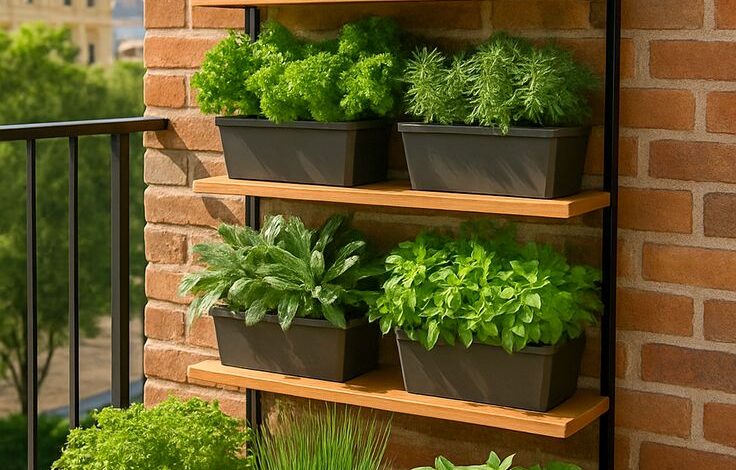
Shelves stacked upward allow multiple pots in one spot.
Features:
- Flexible layout
- Easy to rearrange
- Good for mixed herbs
Best for:
- Oregano
- Thyme
- Rosemary
- Sage
Pocket or Fabric Grow Bags
These are soft planters with multiple pockets.
Features:
- Lightweight
- Wall-mounted
- Space-efficient
Best for:
- Parsley
- Mint
- Basil
Stacked or Tiered Containers
These containers are built to stack vertically.
Features:
- Central structure
- Balanced water flow
- Compact footprint
Best for:
- Small leafy herbs
- Mixed herb collections
How to Use or Apply This in Daily Life
Here is a simple step-by-step guide to creating a vertical herb garden on a balcony.
Step 1: Assess Your Balcony Space
Look at:
- Available wall or railing space
- Sunlight direction
- Wind exposure
This helps you choose the right vertical setup.
Step 2: Choose Suitable Herbs
Not all herbs grow the same way vertically.
Good choices for vertical gardens:
- Basil
- Parsley
- Chives
- Mint
- Oregano
- Thyme
Avoid very large or deep-rooted herbs at first.
Step 3: Select the Right Containers
Choose containers that:
- Have drainage holes
- Are lightweight
- Fit your vertical structure
Drainage is very important in vertical systems.
Step 4: Use Proper Potting Soil
Always use potting mix, not garden soil.
Good potting soil:
- Drains well
- Holds moisture without staying wet
- Supports root growth
This applies to all vertical containers.
Step 5: Install the Vertical Structure Securely
Make sure:
- Shelves are stable
- Hooks are strong
- Wall planters are firmly attached
Safety is important on balconies.
Step 6: Water Carefully
Vertical gardens dry out faster.
Tips:
- Check soil moisture often
- Water slowly to avoid runoff
- Start watering from the top
Consistent watering keeps herbs healthy.
Step 7: Rotate and Adjust
Rotate pots occasionally to ensure even light.
Move herbs if some areas get more sun than others.
Tips for Beginners
These tips make vertical herb gardening easier and more successful.
- Start small with a few herbs.
- Choose lightweight containers.
- Group herbs with similar water needs.
- Water more often than floor pots.
- Trim herbs regularly to encourage growth.
- Use trays or liners to catch water.
- Label herbs clearly.
Common Mistakes to Avoid
Avoid these common beginner mistakes to keep your vertical herb garden healthy.
Overcrowding Herbs
Too many herbs in one area reduce airflow and growth.
Ignoring Drainage
Poor drainage causes root problems quickly.
Uneven Watering
Top pots may get more water than lower ones. Water evenly.
Placing Herbs in Deep Shade
Most herbs need plenty of light to grow well.
Weak Support Systems
Unstable structures can be dangerous and damaging.
Safety and Usage Notes
Vertical herb gardening should always be done safely.
- Secure all structures firmly.
- Avoid overloading balcony rails.
- Use containers suitable for edible plants.
- Wash herbs before use.
- Avoid chemical treatments not meant for food plants.
- Be mindful of water dripping onto lower areas.
This information is educational and focused on safe balcony gardening.
Frequently Asked Questions (FAQs)
Can beginners do vertical herb gardening?
Yes. Vertical systems are beginner-friendly when kept simple.
How much sunlight do balcony herbs need?
Most herbs need several hours of sunlight each day.
Do vertical gardens need more watering?
Often yes, because containers dry out faster.
Can I grow herbs year-round on a balcony?
This depends on climate, but many herbs grow well in warm seasons.
Are vertical gardens expensive?
No. Many systems can be made using simple shelves or hanging pots.
Can I mix different herbs in one vertical system?
Yes, as long as their care needs are similar.
Conclusion
Vertical herb gardening for balconies is a smart and practical way to grow fresh herbs in small spaces. By using walls, shelves, and hanging systems, you can create a productive garden without sacrificing floor space.
For beginners, the key is to keep the setup simple. Choose easy herbs, secure your vertical structure well, use good soil, and water consistently. With these basics, vertical herb gardening becomes an enjoyable and rewarding way to bring fresh flavor and greenery to your balcony.